The importance of reporting your cardholders’ debit card fraud
Article contributor / Diana Kern / Sr. Financial Solutions Consultant
Does most debit card fraud result from lost cards, stolen cards, counterfeit use, card-not-present activity or something else? What are the merchant category codes at which fraud happens the most? Which foreign countries are associated with the highest rates of reported fraud? Having accurate answers to these questions and others depends on thorough fraud reporting for your cardholders’ transactions.
What are the network rules?
SHAZAM® requires issuers to report all transactions confirmed by the cardholder as fraudulent but doesn’t state a requirement for how quickly you must do so after learning of it. SHAZAM’s documentation includes approved and settled activity.
Visa® requires issuers to report confirmed fraudulent transactions no later than 60 calendar days after a transaction, or within 30 days of cardholder notification (assuming notification was more than 60 days after the transaction).
Effective Oct. 18, 2025, the rule covers all transactions, including declined authorizations, zero-dollar transactions, pending non-settled or test authorizations, declined provisioning attempts, and transactions attempting to credit a cardholder.
Mastercard® requires issuers to report fraud regardless of whether chargeback rights apply or whether they intend to pursue a chargeback. However, no stated requirement for timing exists. The rule covers posted and settled transactions.
How do I report fraud to SHAZAM?
For clients who use Dispute Partner Plus™, fraud reporting is part of the service. Our disputes team will ensure each transaction that’s included in a fraud dispute claim is reported to the applicable network. If you’re a client of the product, though, remember to report transactions that aren’t part of a claim yourself. Use the SHAZAM Access procedure described below.
In SHAZAM Access, the fraud reporting functionality for dual-message activity (also known as signature-based) is connected to the transaction. From the transactions tab, search by date, PAN and other criteria as needed, then choose the posted and settled or authorization transaction as follows:
- Purch – for SHAZAM, Visa and Mastercard network dual-message transactions that were authorized first and then posted and settled later.
- Auth – for Visa network transactions that were declined or didn’t settle for another reason listed in the rules section above.
Once you locate the transaction, scroll down and use one of the available options that includes “fraud reporting” in the button’s description, like the example below.
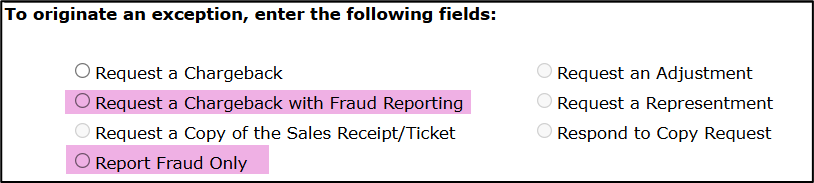
For detailed instructions, including the process for reporting transactions in bulk, log into SHAZAM Access and choose Help > Transactions > Exceptions.
To report fraud for SHAZAM, Visa or Maestro® single-message transactions (also known as PIN-based) use the Reporting for PIN-based Fraud form, #527. To find this in SHAZAM Access, navigate to the SHAZAM Resource menu, then select Forms.
Do I need to report fraud transactions involved in a Falcon case?
Yes, please! Even though the FICO® Falcon® technology coupled with our case management process helps identify whether fraud occurred, tagging a transaction in the risk mitigation tool isn’t a replacement for network fraud reporting in SHAZAM Access.
SHAZAM’s data analytics team uses fraud transactions tagged in Falcon and the activity reported as fraud to meet network requirements in different ways. They support our need for information globally for all clients combined, and individually for your institution. And we share that information with you in many ways. Quarterly presentations for Fraud Advisors™ clients, regular meetings with your client executive and sessions at our SHAZAM Forum every April are a few examples. We hope you’ll join us at the 2026 SHAZAM Forum to hear more! Meanwhile, contact SHAZAM Client Support if you need help with fraud reporting procedures, and contact your client executive with questions about data for your organization or the products mentioned in this article.